Your customers may never leave the chat. Here is how to show up there
Think about how people looked for a service a few years ago. They searched, clicked a link, landed on a website and filled in a form. Every step happened on your site.
That path is getting shorter. People now ask an AI assistant, and more and more often the assistant answers with something they can use straight away.
What changed this month
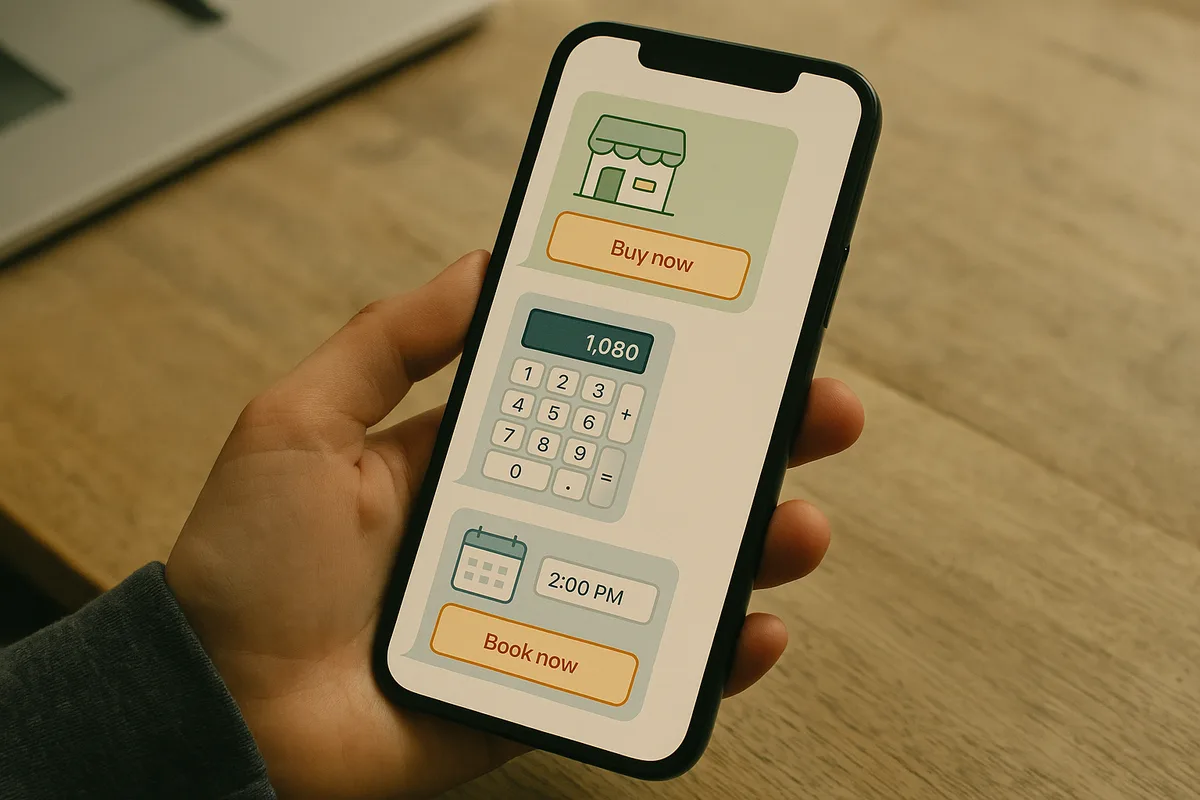
This month OpenAI began rolling out answers in ChatGPT that include small interactive pieces, such as calculators and forms, right inside the conversation. It started with paid plans. Google is moving the same way from the business side: its new Gemini agent can act across work tools and any app that offers an MCP server.
Put those together and you get a new habit. A customer asks a question, gets an answer they can act on, and finishes the job without ever opening a browser tab.
Why this matters for a small business
If the assistant does the visiting for your customer, three things follow.
- The assistant decides what to show. It reads your website, your listings and your reviews, and turns them into an answer. If that information is thin, out of date or hard to read, someone else’s business is easier to recommend.
- Fewer clicks, not fewer customers. Visits to your site may drop even while interest grows. The people who do arrive are closer to buying, because the assistant already answered their early questions.
- Doing beats describing. An assistant can only book, quote or order for a customer if your business offers a way to do that online. A phone number alone is a dead end.
How to show up in the chat
You do not need to rebuild everything. Start here.
- Keep one clear source of truth. Your website should state plainly what you do, where, for whom, at what price range and how to start. Assistants quote what they can read.
- Answer the real questions. Write short, direct answers to the questions customers actually ask you. A good frequently asked questions page is suddenly one of the most valuable pages you have.
- Make the next step doable online. Online booking, a quote form or a simple order page gives an assistant something it can do for the customer, not just something to describe.
- Keep your details the same everywhere. Your name, address, hours and links should match on your site, your business profiles and your social pages. Mismatches make assistants less sure about you.
- Measure differently. Watch enquiries, bookings and orders, not only page views. Ask new customers how they found you. “ChatGPT told me” is becoming a common answer.
How we handle this for our own apps
Every app we launch gets its own website for exactly this reason. It is written so people and AI assistants can both understand what the app does and who it is for, and it gives them a clear next step. For the businesses using OwnSites, booking, forms and reviews are built in, so an assistant has something real to point to.
The short version
Your customers are not going away. Some of them are just meeting you inside a chat first. Make sure what they find there is clear, current and easy to act on.
Want your app or website ready for this? Tell us what you are building.
Sources: TechCrunch: Google brings agentic AI to Gemini, starting with businesses · ChatGPT, Gemini, Perplexity and Copilot release notes